
If you’ve ever shopped for a hanging light, you’ve probably asked yourself:
“Is this a pendant or a chandelier? And does it even matter?”
Yes — it matters. A lot.
Pendants and chandeliers hang from the ceiling, but they serve very different purposes. Choosing the wrong one can leave your dining table underlit, your kitchen island looking cluttered, or your entryway feeling empty.
In this first post of our Ceiling Light Buying Guide, we’ll break down the difference between a pendant and a chandelier — and then introduce two other hanging lights you’ll see everywhere: island lights and semi-flush mounts.
By the title end, you’ll know exactly which type to buy for your space.
Pendant Light vs. Chandelier: The Quick Answer
Here’s the simplest way to tell them apart:
- A chandelier has multiple arms or branches holding several bulbs. It’s usually round, tiered, or decorative — and it works as the main focal point of a room.
- A pendant is a single hanging light with one bulb and one shade or globe. It can be used alone or grouped together over a long surface.
Quick rule of thumb:
If it has arms holding multiple lights, it’s a chandelier.
If it’s one light hanging by itself, it’s a pendant light.
The 4 Main Types of Hanging Lights
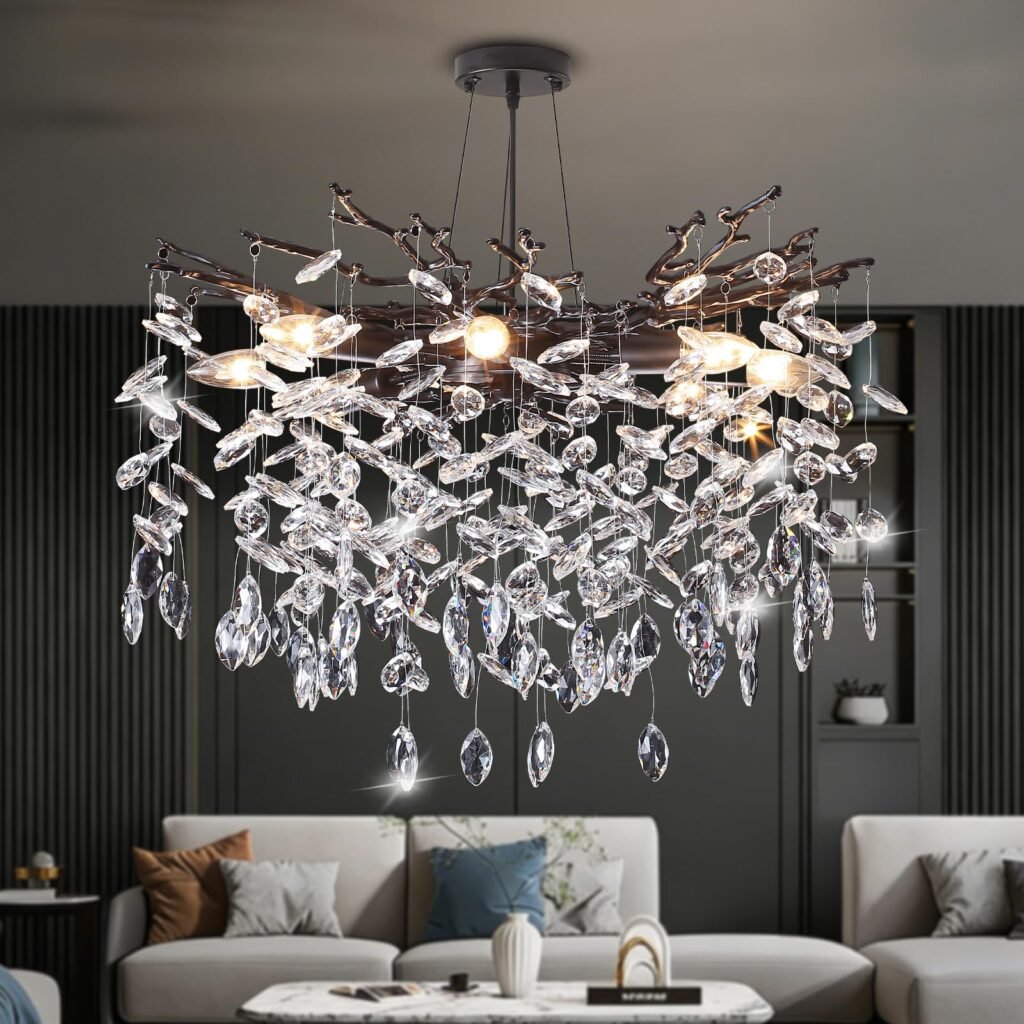
1. Chandelier
A chandelier is a hanging light with multiple arms or branches extending from a central body. It usually has several bulbs and often looks more decorative or formal.
Common styles: traditional crystal, modern sputnik, farmhouse wood bead, transitional metal ring.
Best for: dining rooms, entryways, living rooms, stairwells, or any room where you want the light to be a focal point.
Quick check: Does it have arms or branches holding multiple lights? Then it’s probably a chandelier.
2. Pendant Light
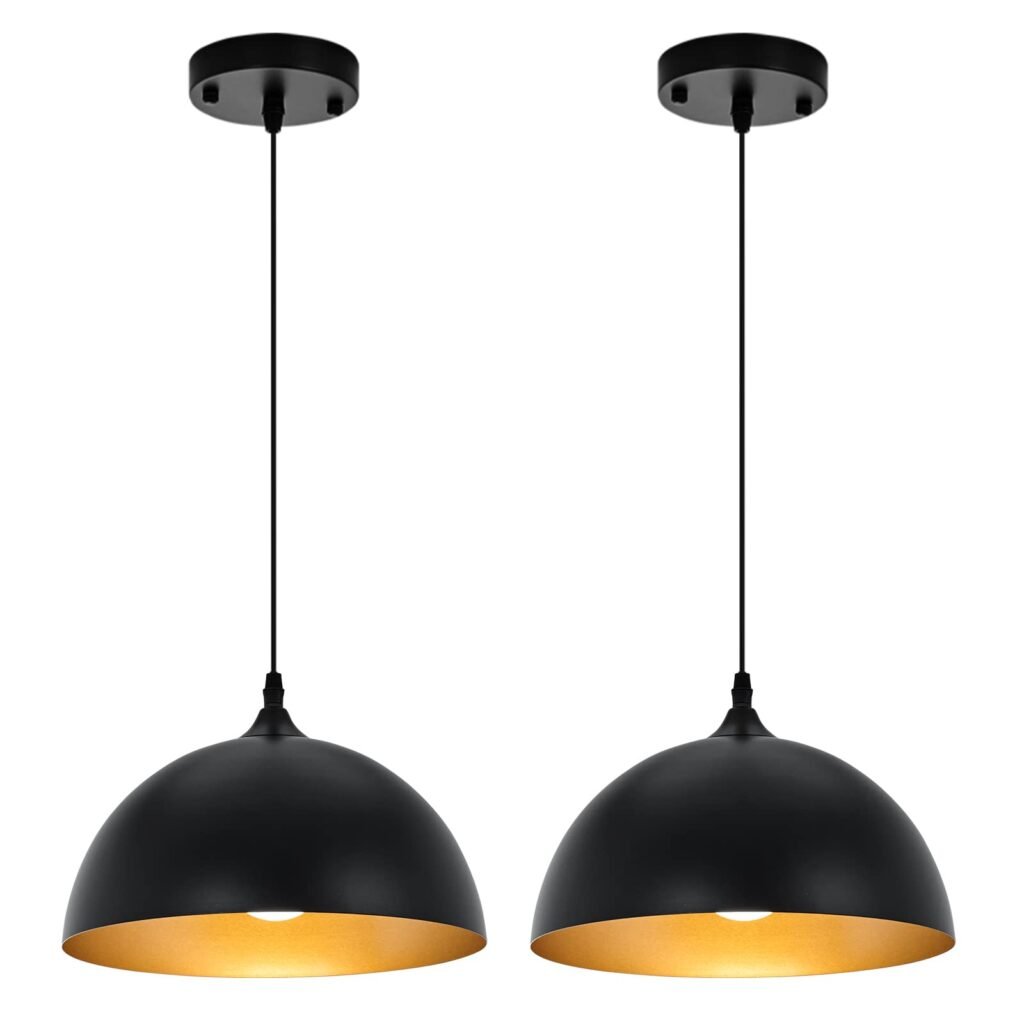
A pendant light is a single hanging light, usually with one bulb and one shade or globe. It hangs from a cord, chain, or rod.
Common styles: glass globe, metal cone, woven rattan, clear glass with Edison bulb.
Best for: kitchen islands (used in groups), breakfast nooks, bedside lighting, over a small sink, or in a hallway.
Quick check: Is it one light hanging by itself? That’s a pendant.
3. Island Light / Linear Light / Billiard Light
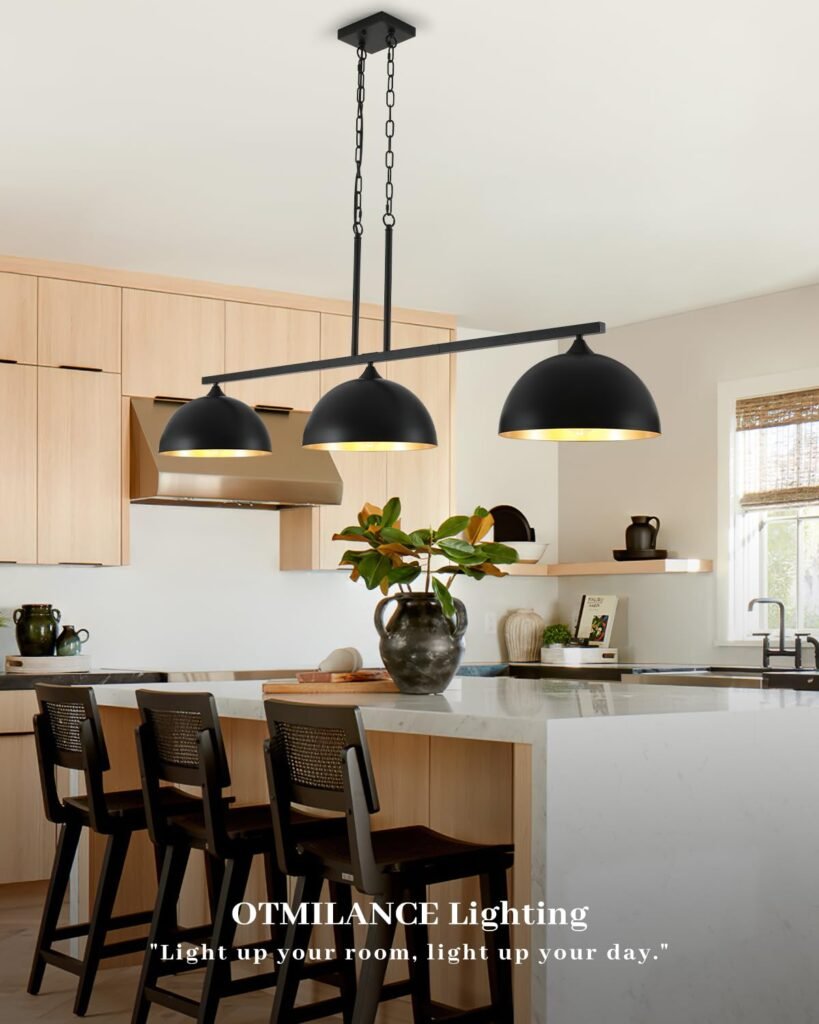
An island light (also called a linear pendant or billiard light) is a long, narrow fixture with multiple bulbs arranged in a row. It’s designed to hang over a long surface like a kitchen island or a rectangular dining table.
Common styles: long metal bar with glass shades, wooden beam with exposed bulbs, modern linear chandelier.
Best for: kitchen islands, long dining tables, bar counters, or any long narrow space.
Quick check: Is the fixture long and rectangular, with bulbs in a straight line? That’s an island light.
4. Semi-Flush Mount Light
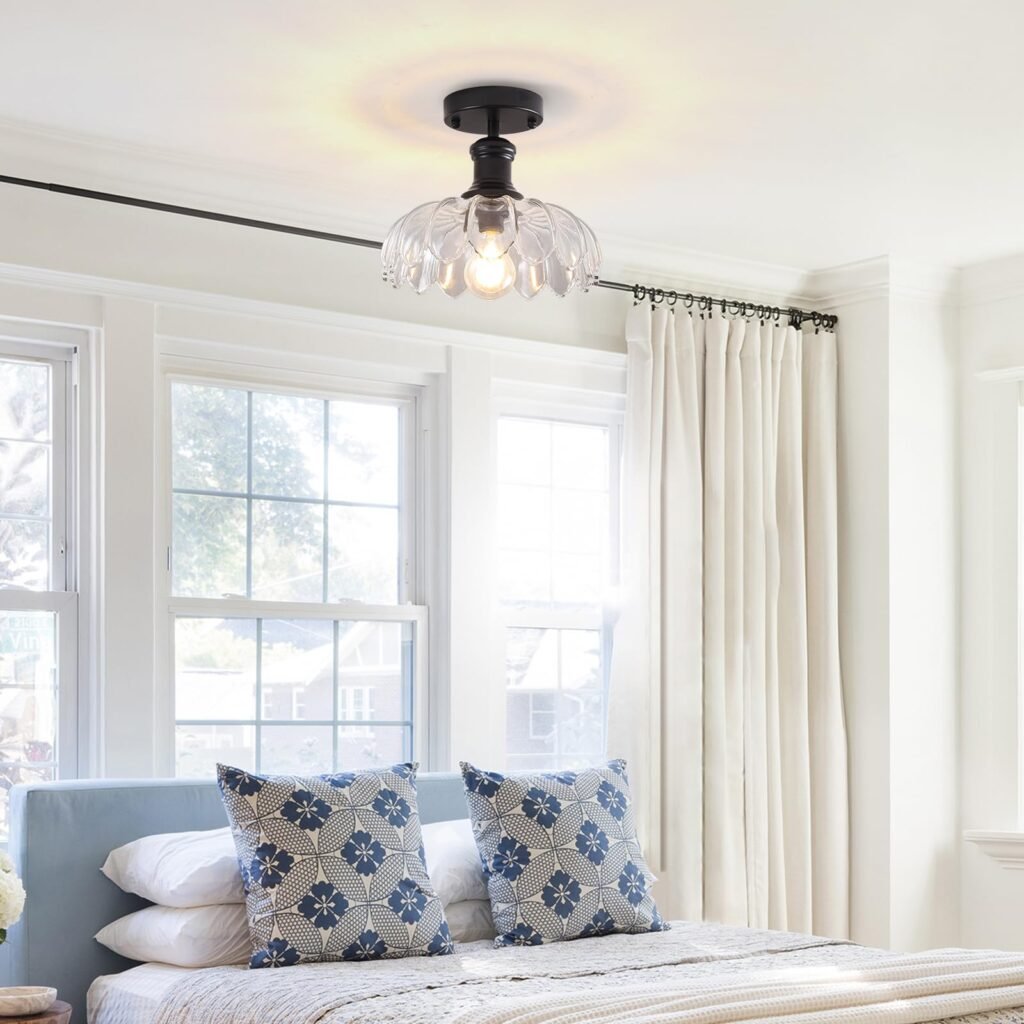
A semi-flush mount is a ceiling light that hangs down only a few inches from the ceiling. It’s not really a hanging light, but it often gets mixed into the same category.
Common styles: low-profile drum, small globe cluster, modern geometric.
Best for: rooms with low ceilings (under 8 feet), hallways, closets, small bedrooms.
Quick check: Does it hang down more than 6–12 inches? If not, it’s semi-flush, not a true pendant or chandelier.
Side-by-Side Comparison
| Type | Number of Bulbs | Shape | Typical Placement |
|---|---|---|---|
| Chandelier | Multiple, on arms | Round or tiered | Dining room, entryway |
| Pendant | Usually one | Single shade or globe | Kitchen island, bedside |
| Island / Linear | Multiple, in a row | Long and narrow | Kitchen island, long table |
| Semi-Flush Mount | One or more, close to ceiling | Low profile | Hallway, low ceiling room |
How to Choose the Right One for Your Space
Now that you know the difference, here’s the simple rule most people need:
For a Dining Table
- Round or square table → choose a round chandelier or a single large pendant.
- Long rectangular table → choose a linear / island light or a long chandelier with a rectangular shape.
- Small bistro table (2–4 people) → a single pendant can work well.
For a Kitchen Island
- Almost always choose pendants in a group or a linear island light.
- Don’t use a traditional round chandelier — it will look out of place and take up too much visual space.
- For a 6-foot island, two or three small pendants work better than one large fixture.
For an Entryway or Foyer
- A chandelier is the most common choice because it creates a focal point.
- If you have a low ceiling, use a semi-flush mount instead.
- If you have a two-story entryway, a larger multi-tier chandelier can fill the vertical space.
For a Bedroom
- You can use a small chandelier or a single pendant as a decorative accent.
- Place it at the foot of the bed, in a corner, or over a nightstand — not directly above the pillow.
- Keep the brightness low and use a warm white bulb.
The #1 Mistake Buyers Make
The biggest mistake we see?
Calling everything a “chandelier” and ending up with the wrong shape for the room.
Example: You buy a beautiful round chandelier for a 7-foot rectangular dining table. It looks too small and the light doesn’t reach the ends of the table. What you actually needed was a linear island light.
That’s why knowing these four terms can save you hundreds of dollars in returns — and a lot of frustration.
Quick Recap
- Chandelier = multiple arms, round, formal or decorative
- Pendant = single hanging light, used alone or in groups
- Island / Linear Light = long rectangular fixture, made for long surfaces
- Semi-Flush Mount = close to ceiling, for low ceilings or small spaces
What’s Next?
In our next post, we’ll show you the exact formula to calculate the right diameter and height for your chandelier, pendant, or island light — based on your room size and ceiling height.